
Your Flashing Authority
Why Should a Pre-Installation Meeting be Mandatory?
Open Editorial from Roy Schauffele, FCSI, CCPR, FABAA, CABS
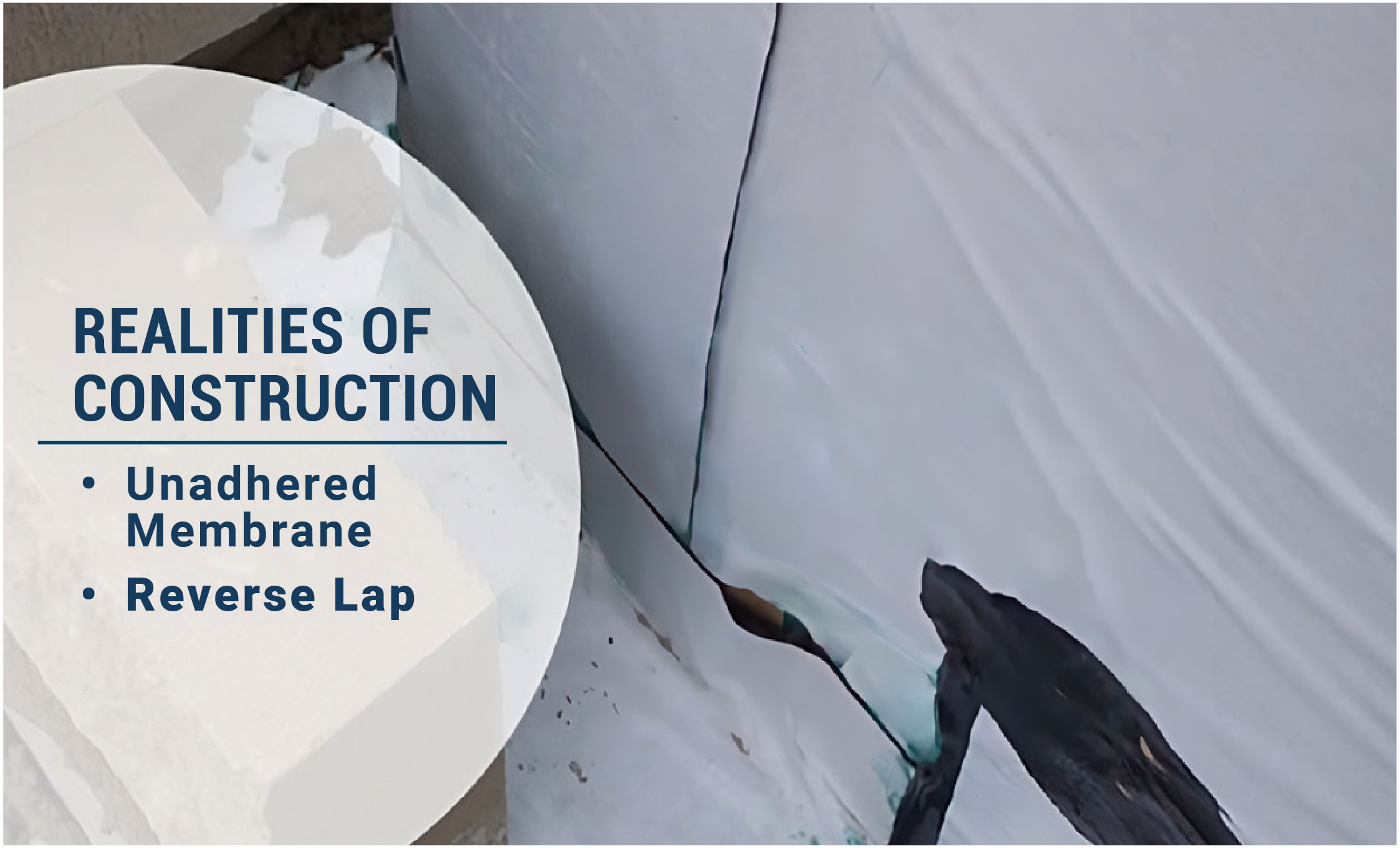
Who should install the Thru-wall Flashing (TWF), and when should it be installed? The mason, the air barrier contractor, or the day laborer from the Lowes/Home Depot/Target parking lot.
The air barrier product shown here has had a decades-long excellent field performance record, and it isn’t a material problem.
This is solely a sequencing problem on the part of the GC, as they awarded the TWF part of the contract to the mason. There was no sequencing or coordination meeting among the subs on this job. The air barrier contractor did their contracted installation and left the site. The mason then performed their contract portion, installing the TWF in such a manner as to create sh mouths and, most notably, an unsealed reverse lap. Visually this is a leak, a rework, and possibly a lawsuit waiting to happen and one that you will be pulled into, costing you a nice chunk of time and money!
It is recommended that before the air barrier installation, a mandatory sequencing meeting be held. This will help prevent any misunderstanding in each trade’s scope. It is also a time to discuss compatibility between your TWF and neighboring materials. A pre-installation meeting should be held to review the construction documents, identify potential issues, set goals, and establish a timeline so that the trades can move forward on the project with clear expectations. You should seek the support of your air barrier supplier and your CABS to push this issue forward with the architect/specifier and GC.