Your Flashing Authority
To Prime or Not to Prime
Ensuring Self-Adhering Membranes Stick
Gravity is a challenge for peel-and-stick membranes, particularly when applied in vertical configurations (on walls) or inverted positions (on overhangs). These membranes entered the market in the 1990s as roofing underlayment and then transitioned to wall applications. A vulnerability became evident: adhesive performance under the strain of gravity. The industry responded by insisting on substrate preparation (ensuring surfaces are clean and dry) and introducing primers, which allowed these early rubberized asphalt peel-and-stick products to perform as intended.
Primers are designed to promote adhesion and are available in low-VOC and water-based formulas, both of which rely on harsh chemicals to achieve their bonding properties. It’s important to note that primers cannot compensate for improper substrate preparation—priming over dirty or wet surfaces is futile.
Self-adhering materials must perform in dynamic environments throughout the wall’s lifespan. Adhesive behavior varies with temperature, time, and substrate porosity. Key factors such as tack, shear resistance, temperature tolerance, and bonding strength must be considered for lasting durability. Advances in polymer chemistry like butyls and acrylics have led to innovative formulations that deliver superior performance across various conditions without requiring primers, aka primerless membranes.
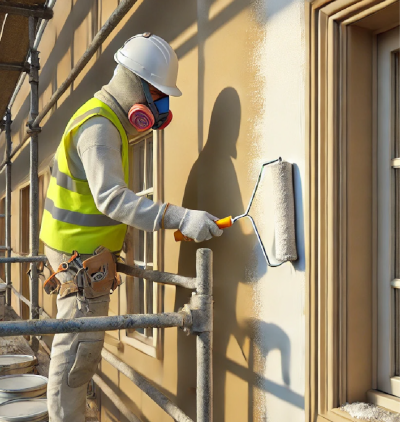
Example of a contractor wearing his PPE while applying primer
Why Choose Self-Adhering Products That Don’t Require a Primer?
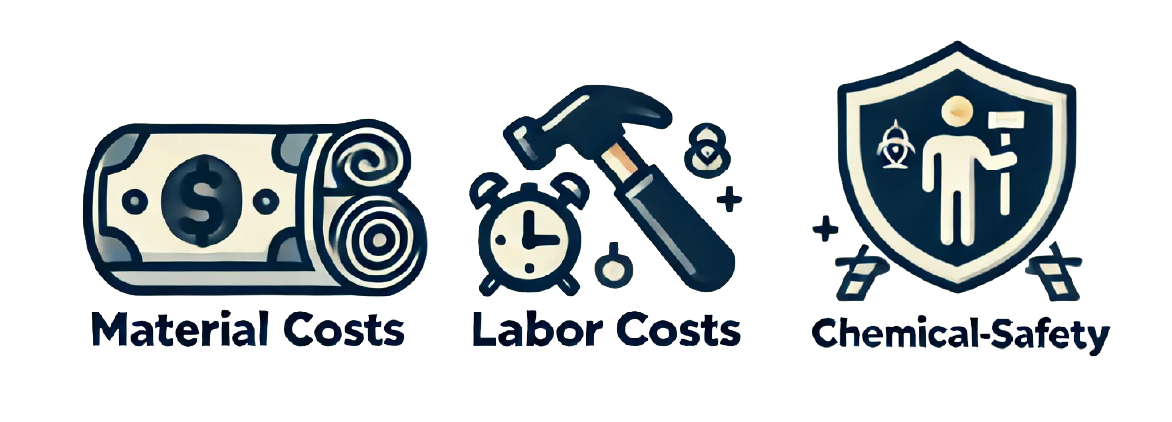
• Material Costs: The cost of primer often matches that of the self-adhering product per square foot, which effectively doubles the price of the material
• Labor Costs: Priming a wall can double installation time, increasing overall labor expenses.
• Installer Safety: Eliminating the need for primers safeguards installers from exposure to chemicals, and eliminates the need for respirators
To summarize, using self-adhering membranes with primers not only increases material and labor costs but also introduces avoidable risks. Fortunately, many butyl and acrylic products are available that eliminate the need for primers, streamlining the installation process and reducing overall costs.