
Your Flashing Authority
Through-Wall Flashing Height
A Tale of Proper Placement in Masonry Walls
Through-wall-flashing (TWF) is required to extend up the backer wall at least 8”, which has been the standard for many years in the masonry industry. However, in the last few decades, masonry cavity walls have become more crowded with air barriers, cavity drainage material, and continuous insulation. Here is a guide to follow for modern TWF installations:
When a wall only has an air or vapor barrier and cavity drainage material, have your TWF go up the backer wall to a height of 6” above the top of the cavity drainage material. If the TWF is not extended above the cavity drainage material, mortar droppings may be in direct contact with the air barrier. This could be problematic due to potential ponded water against the air barrier and the possibility of salts/minerals from the mortar leaching into the air barrier.
When a wall has an air barrier, continuous insulation, and cavity drainage material, the TWF can have an 8” minimum rise since the mortar droppings will not be in direct contact with the air barrier.
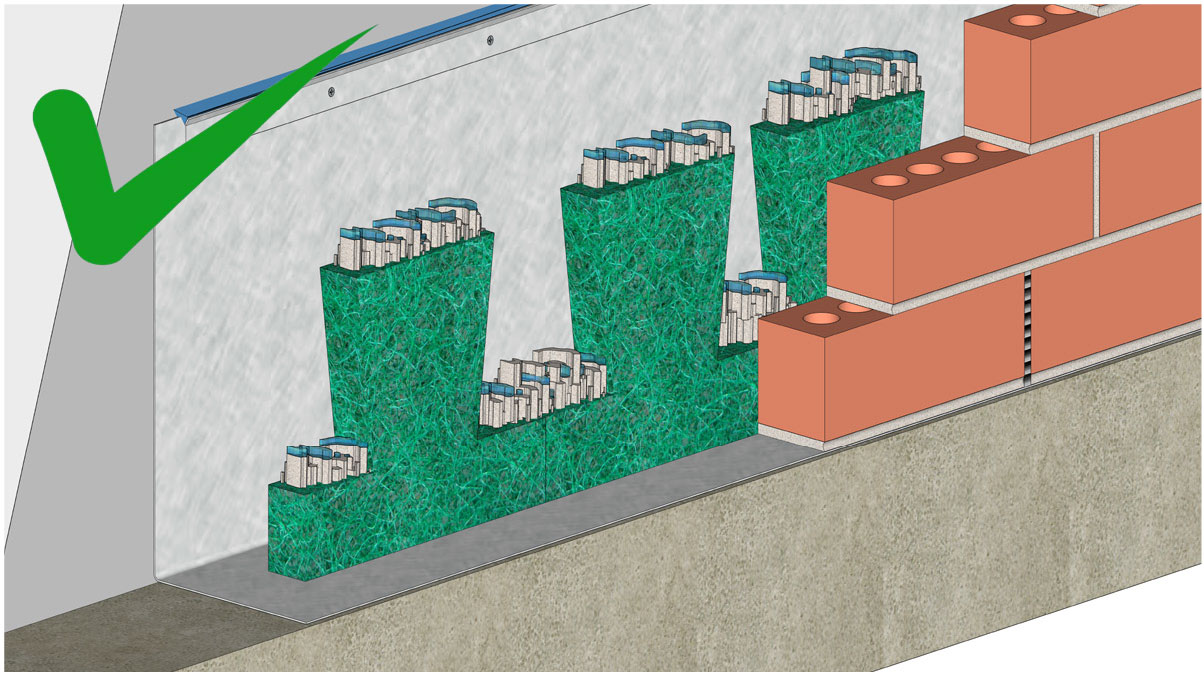
Through-wall flashing brought 6” above the mortar netting.
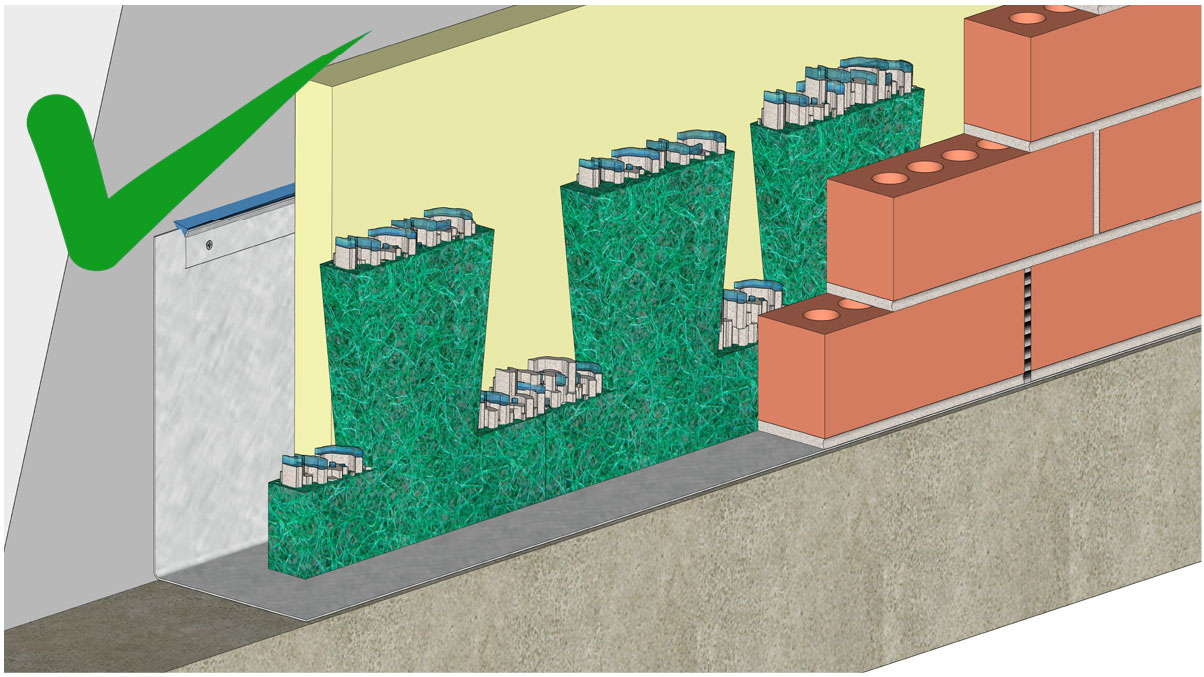
The exterior insulation is protecting the air barrier from the mortar so the through-wall flashing does not need to be brought 6” above the mortar netting.
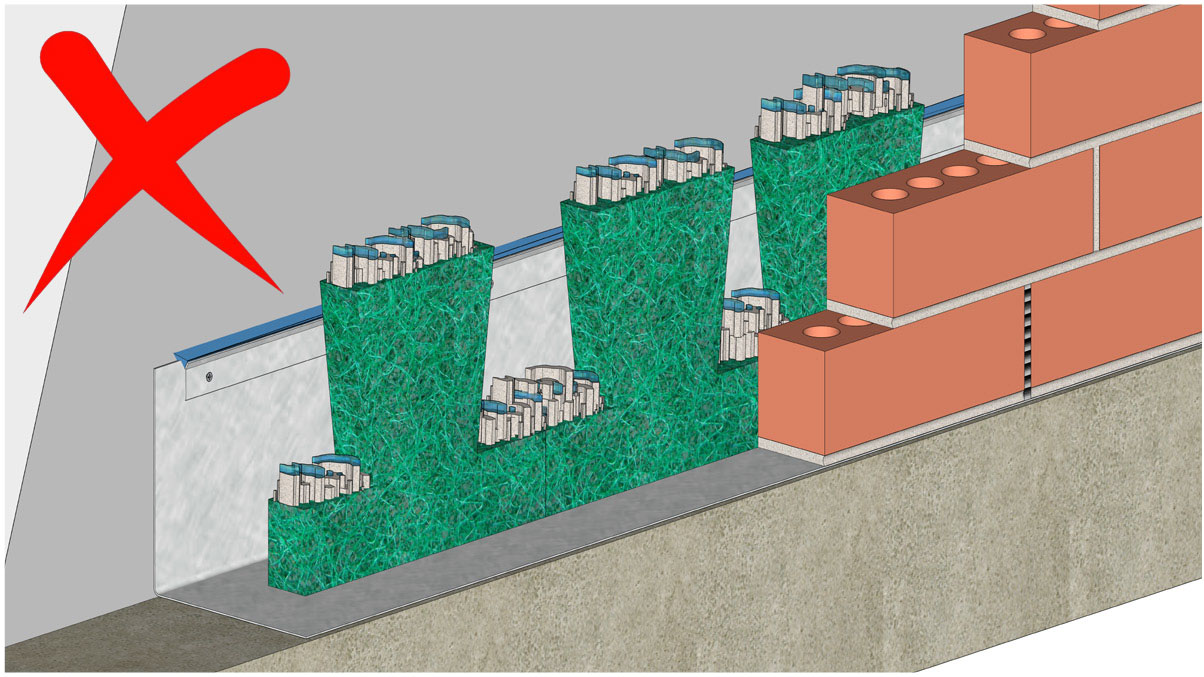
Through-wall flashing not brought 6” above the mortar netting so the mortar and moisture is sitting on the air barrier.

About the Author:
Craig Wetmore, FABAA, CDT, EBS, President of York Flashings, Second Vice Chair of the ABAA, Co-chair of the ABAA marketing committee, and the flashings and terminations task group. In 2020 Craig became a Fellow of the ABAA.
For more information, contact: York Flashings, (800) 551-2828, [email protected]