
Your Flashing Authority
How Hot is Too Hot?
Understanding High-Temperature Roofing and Flashing Products
The concept of high-temperature roofing and flashing products has been prevalent for decades, yet remains vaguely defined within the industry.
One common inquiry for both flashing manufacturers and hot sauce producers is, “How hot is too hot?” For hot sauce, the answer is straightforward; for flashing, it’s more complex.
The Fenestration and Glazing Industry Alliance (FGIA) sets the benchmark with the AAMA 711 test, which evaluates the durability and performance of fenestration flashings. This test involves placing a test panel vertically under one of three thermal conditions for seven days to evaluate for any movement, slumping, or sliding of the membrane:
Level 1: 122°F (50°C)
Level 2: 149°F (65°C)
Level 3: 176°F (80°C)
After heating, the samples are cooled to room temperature and subjected to a 90-degree peel adhesion test (ASTM D3330/D3330M Method F). The assessment records any physical changes like delamination or blistering and determines the lowest temperature at which the flashing remains effective.
Concerning high-heat roofing underlayments, these materials undergo different tests, such as the ring and ball test (ASTM D36), to measure the temperature at which the adhesive becomes liquid or flows—an undesirable outcome. These underlayments are typically tested at temperatures between 240°F and 260°F, significantly higher than standard products and, consequently, more costly.
Here’s a quick overview of common through-wall flashing products:
Rubberized Asphalt:
- Rarely passes AAMA 711.
- The typical flow temperature is between 160-180°F.
- High-heat underlayments reach 240-260°F.
- Note: All rubberized asphalt products require primers that are compatible with these temperatures.
Butyls:
- Many meet the AAMA 711 standards, with variations depending on the amount of adhesive and the type of facer used.
- Generally, flows at about 300°F under ASTM D36.
Acrylics:
- Like butyls, many meet AAMA 711 standards, with performance dependent on adhesive quantity and facer type.
- Typically flows just over 300°F under ASTM D36.
A key consideration is understanding the conditions under which flashing tapes encounter high temperatures. Factors include the reflective properties of the surface (e.g., bare metal can exceed ambient temperature by up to 100°F) and the duration of heat exposure.
This comprehensive analysis of high temperature roofing and flashing products helps clarify their application and limitations, ensuring informed decisions in their selection and use.
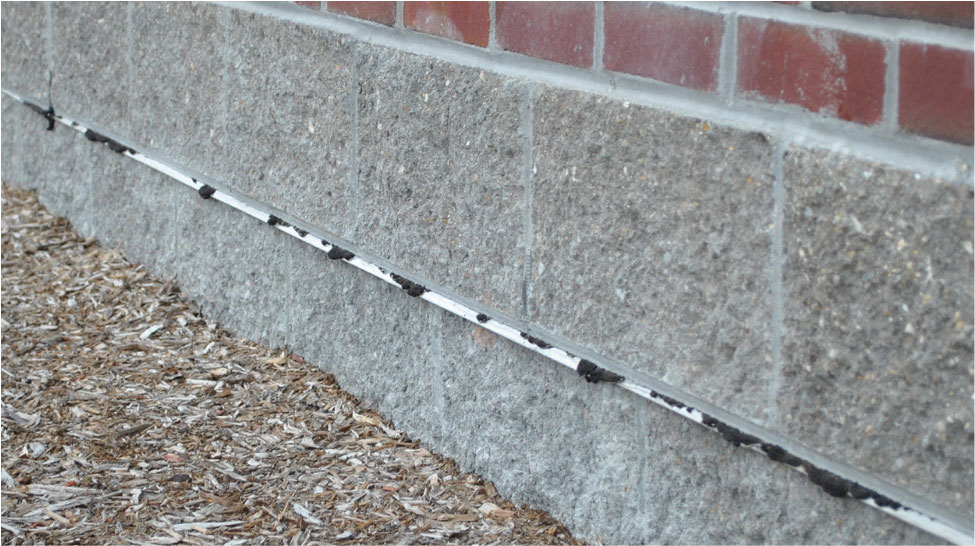
Example 1 of a rubberized asphalt that has reached the flow temperature
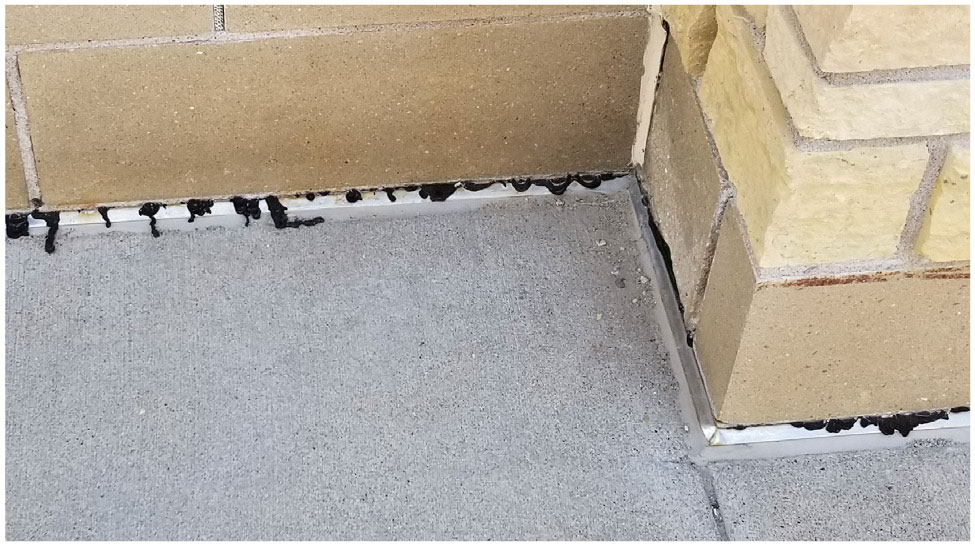
Example 2 of a rubberized asphalt that has reached the flow temperature