
Your Flashing Authority
Moisture Management in Brick Masonry Veneers
3D's: Deflect, Drain, Dry
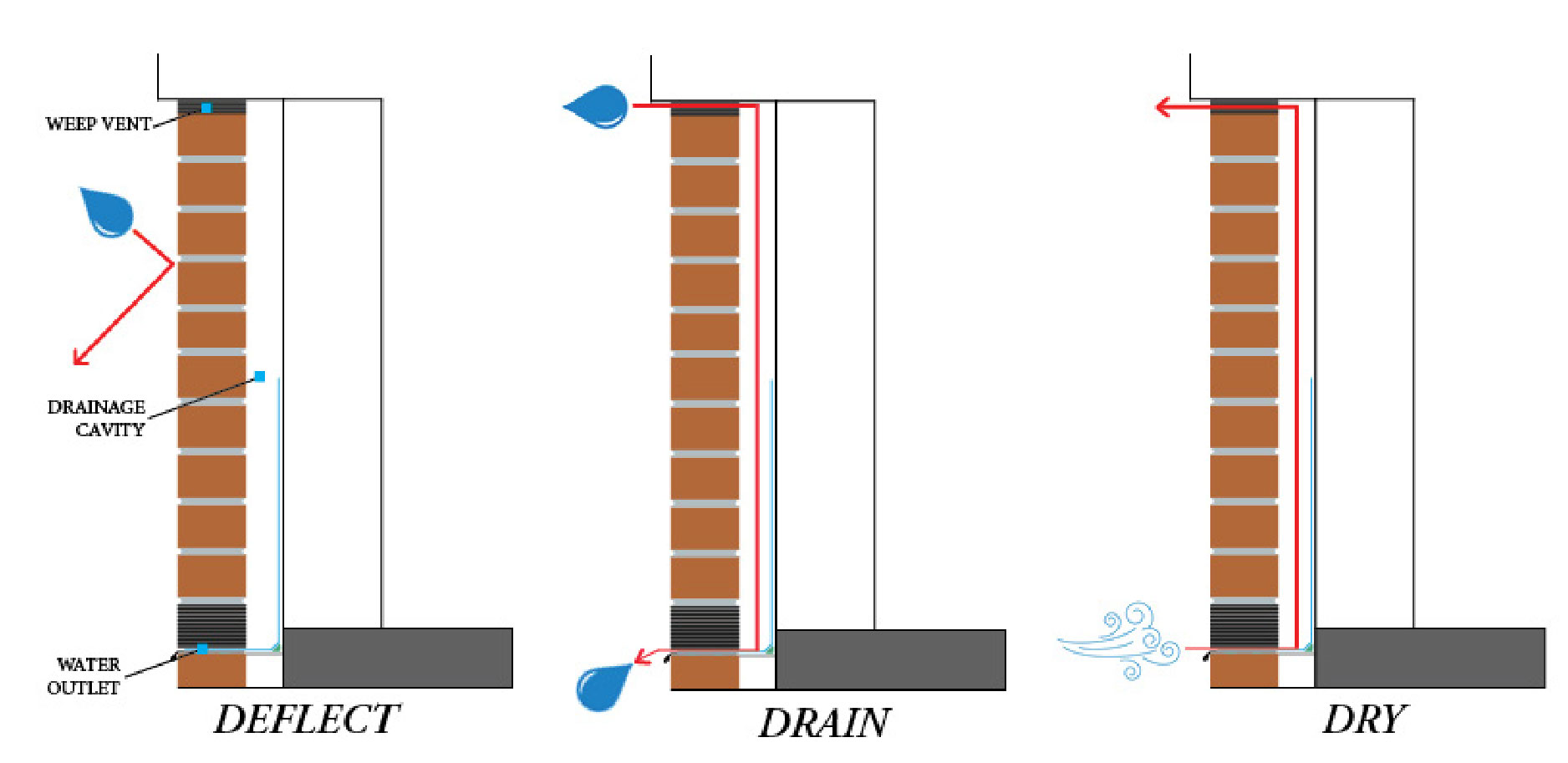
3D’s: Deflect, Drain, Dry
Since the 1920s, masonry cavity walls have been used to save money and speed construction compared to building mass masonry walls. The cavity walls utilize the 3–D system for moisture management. Deflect, Drain, and Dry:
Deflect
Brick masonry veneers play a crucial role in protecting buildings from water infiltration, serving as the first line of defense against bulk water penetration by deflecting bulk water away from the interior of the structure. Properly grouted joints and careful detailing around penetrations will significantly enhance the effectiveness of this veneer system in keeping water out.
Drain
If water penetrates the veneer, the cavity wall is engineered to provide a designated space for the water to descend until it reaches the flashing. Through-wall flashing catches the water in the wall and directs it to the exterior through weep vents.
Dry
An air cavity with weep vents to use the air flow to dry the cavity. Properly placed weep vents are essential for allowing water trapped in the cavity wall to escape. A mortar collection device is necessary to collect any excess mortar droppings that could potentially cause issues inside the cavity wall.
Cavity walls utilize the 3-D system effectively, helping us maintain a dry interior in our buildings. Things that we can do to help:
- Design: Utilize brick ledges and drip edges to get bulk water draining away from the wall. Inset fenestrations to minimize exposure to bulk water.
- Longevity: Using flashings that will perform as intended and last the life of the wall is a critical design decision.
- Clean cavity: Minimize mortar droppings and utilize mortar deflection nettings to help keep the water flowing down and the air flowing to remove residual moisture.